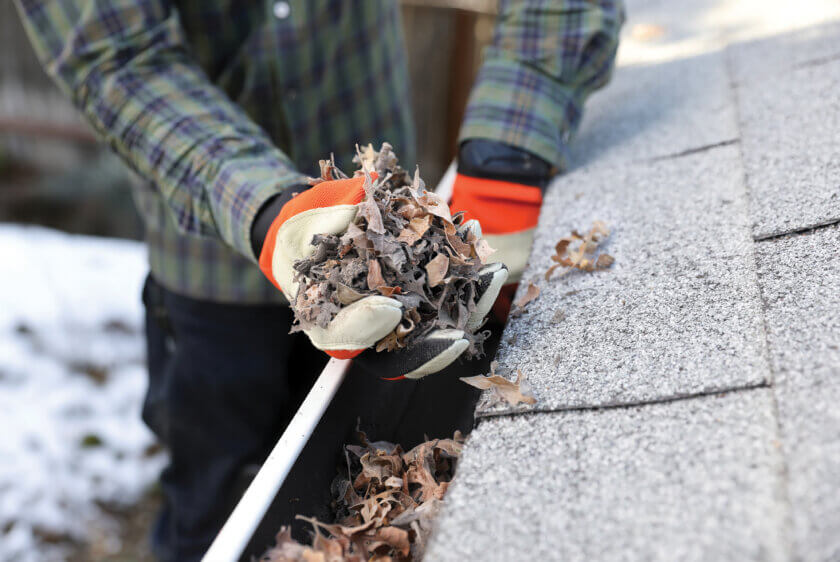
Photo Credit: Gutterglove®
The busy season is winding down, and that first freeze is closer than you think. Before the temperature drops and the calls start rolling in, there’s a short window to get gutters ready the right way. Skip it, and you’re looking at ice dams, cracked seams, and callbacks that eat into your margins. Handle it now, and you set up every home for a clean, dry winter.
Let’s walk through five steps to lock in before the cold sets in.
Step 1: Clear Out Fall Debris Before It Freezes Solid
Leaves, pine needles, and grit pile up fast this time of year. Left in the gutter, that mess holds water. And once the temperature drops, it freezes into a solid block that no amount of hoping will melt.
Get ahead of it now:
- Scoop out leaves, twigs, and built-up sludge from every run.
- Flush the system with a hose to confirm clean, steady flow.
- Check that downspouts push water well away from the foundation.
Do this before the freeze and you avoid one of the worst parts of winter work: chipping ice out of a gutter in January. A clean gutter now is a gutter that keeps draining all season.
Step 2: Inspect for Damage While It’s Still Easy to Fix
Cold weather is hard on weak spots. A small crack becomes a split. A minor leak becomes a gusher. And a sagging run becomes the reason water backs up under the shingles.
Walk each system now and look for:
- Loose hangers or sections starting to pull away.
- Rust, holes, or separated seams.
- Peeling paint or water stains on the siding below.
Catching these issues before winter is faster, cheaper, and far less disruptive than an emergency fix in freezing conditions. Ice dams form when attic heat melts snow that refreezes at the roof edge, and that backflow finds every weak point you didn’t address.
Step 3: Trim Back Branches Before the First Storm
Overhanging limbs are a problem waiting to happen. Load them with ice and snow, and one heavy storm can snap a branch straight onto the roof and gutters below.
Clear the risk ahead of time:
- Trim limbs at least six feet back from the roofline.
- Clear loose debris off the roof before the first snowfall.
Step 4: Confirm Water Has Somewhere to Go
Even a clean gutter fails if the water has nowhere to drain. And in winter, water that pools near a foundation doesn’t just sit there. It freezes, expands, and cracks whatever it’s touching.
Before the cold arrives, make sure:
- Downspouts extend at least three to six feet from the foundation.
- Drainage paths stay clear of leaves, mud, and debris.
- Splash blocks are angled to guide water away from the home.
This is a quick check that prevents a costly problem. Solving drainage now means no frozen ground damage to explain come spring.
Step 5: Install Gutter Protection Before the Snow Flies
Here’s the move that pays off all winter long: quality gutter guards. Install them before the freeze, and you shut the door on the debris that causes clogs in the first place.
Good protection does three things:
- Keeps leaves and grit out, so no more mid-winter ladder climbs.
- Lets water flow through and drain the way it should.
- Holds up to freezing temperatures without warping or cracking.
For contractors, this is the upsell that keeps giving. Homeowners get fewer clogs and less maintenance. You get a higher-margin add-on, quick installation, and a customer who calls you first next time. That’s the kind of value that drives word-of-mouth.
Don’t Wait for the First Freeze
Winter is coming whether the gutters are ready or not. Once that first hard freeze hits, the easy fixes get harder, the costs climb, and the emergency calls start. Getting ahead of it now is the smartest, most profitable move on the board.
Clear the debris. Inspect the runs. Trim the branches. Check the drainage. Install the protection. Knock it out before the cold sets in, and every home you touch heads into winter ready to handle it.
The window is open now. Act before the first freeze, and turn pre-winter prep into your busiest, most reliable season yet.